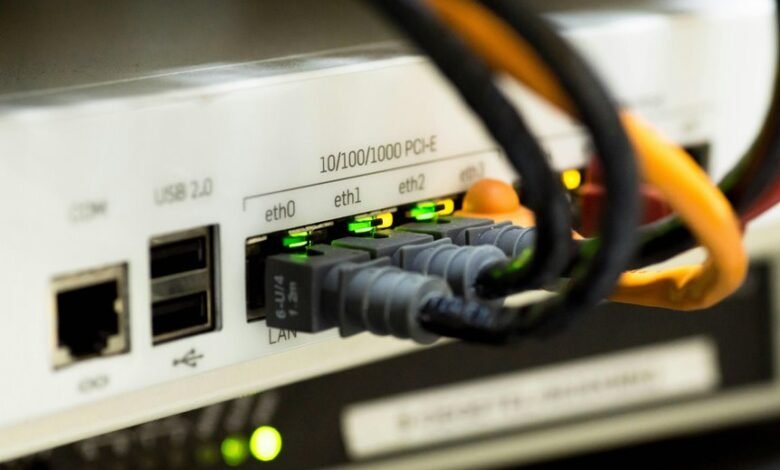
The Smart Digital Network 605264608 for Stability integrates data-driven monitoring with automated control and edge orchestration. It emphasizes real-time analytics, robust data governance, and cross-domain trust to sustain uptime. Secure, scalable connectivity underpins interoperable components and rapid anomaly detection. Automated incident response enables swift recovery and continuous performance optimization. The framework offers transparent decision flows and adaptive risk management, inviting scrutiny of governance, provenance, and operational viability to determine its applicability in complex environments.
What Is the Smart Digital Network 605264608 for Stability?
The Smart Digital Network 605264608 is a framework designed to enhance systemic stability by integrating data-driven monitoring, automated control, and resilient communication protocols across distributed components. It emphasizes data governance to ensure accountable data handling and edge orchestration to coordinate local processing. The approach enables transparent decision flows, scalable resilience, and adaptive risk management for freedom-oriented, data-informed infrastructures.
How Real-Time Analytics Fuel Resilience and Uptime?
Real-time analytics play a pivotal role in sustaining resilience and uptime by continuously ingesting, processing, and correlating signals from distributed components. It converts raw telemetry into real time insights, enabling rapid detection of anomalies.
The approach tracks resilience metrics, supports incident orchestration, and informs decisions for uptime optimization, reducing mean time to recovery and strengthening operational confidence.
Building Secure, Interoperable Connectivity at Scale
Building secure, interoperable connectivity at scale requires harmonizing authentication, authorization, and encryption across heterogeneous networks and devices while maintaining performance and reliability. The analysis identifies governance frameworks and data provenance as critical inputs, enabling cross-domain trust and auditable interoperability. Two-word discussion ideas emerge: governance standards, provenance tracking, guiding scalable integration while preserving freedom, transparency, and resilience in diverse ecosystems.
Automating Recovery: Incident Response and Continuous Performance
Automating recovery in modern networks hinges on the integration of incident response workflows with continuous performance monitoring to minimize mean time to recovery and sustain service quality. The approach quantifies fault impact, automates containment, and schedules recovery actions, aligning with service-level objectives. Incident response capabilities coupled with continuous performance data enable proactive adjustments, reducing risk and promoting resilient, freedom-enabled operations. continuous performance.
Conclusion
The Smart Digital Network 605264608 for Stability functions as a telemetry-driven nervous system, translating real-time signals into calibrated responses. Its architecture, anchored by provenance and governance, mirrors a disciplined orchestra where data flows harmonize with automated control. Like a weathered compass, secure interoperability guides rapid recovery and sustained uptime. In this measured integration, resilience emerges not from rigidity but from adaptive, data-informed stewardship—an unseen lattice ensuring stability while enabling growth, even as components drift.